Coming soon on Google Play

Your city, mapped and narrated.

Join the waitlist

Free to start · Freemium · Europe-first · Built for busy families

Trails to explore

Bodleian Library

Bodleian Library

Oxford

Step into the world’s oldest university library at the Bodleian, founded in 1602. A treasure trove of knowledge, it houses over 13 million items, including rare manuscripts, historic maps, and iconic reading rooms like Duke Humfrey’s Library. Its architecture, from the Radcliffe Camera to the Clarendon Building, tells stories of centuries of scholarship. Whether you're a history buff or a book lover, exploring the Bodleian offers a profound connection to the intellectual heritage of Oxford.

Brucknerhaus

Brucknerhaus

Linz

Nestled along the Danube in Linz, Austria, the Brucknerhaus is an architectural marvel with a twist of the mysterious. Designed by Finnish geniuses Heikki and Kaija Siren, this venue isn’t just a concert hall; it’s a portal to the soul of Bruckner’s music. Since its grand opening in 1974, with Herbert von Karajan orchestrating Bruckner’s Symphony No. 7, it has hosted around 200 performances annually, drawing 180,000 curious souls eager to experience the unusual. Its three main halls— the imposing Brucknersaal, the intimate Stiftersaal, and the cozy Keplersaal—each hold secrets and stories, offering a symphonic gateway to the city’s vibrant cultural pulse.

Palazzo Pubblico

Palazzo Pubblico

Siena

Dominating Siena’s picturesque Piazza del Campo, the Palazzo Pubblico stands as a masterpiece of medieval Gothic architecture and civic pride. Constructed between 1297 and 1310, this historic town hall has long been the seat of Siena’s governance, now also housing the Civic Museum. Its façade is crowned by the slender Torre del Mangia, and inside, visitors can marvel at renowned frescoes, including Ambrogio Lorenzetti’s Allegory of Good and Bad Government—an enduring symbol of civic virtue and artistic brilliance from the 14th century.

Piccadilly Circus

Piccadilly Circus

London

At the heart of London’s bustling West End, Piccadilly Circus is a vibrant crossroads where history and modern spectacle collide. Founded in 1819 to connect Regent Street and Piccadilly, this circular junction has become an emblem of the city’s energetic spirit. Its iconic Shaftesbury Memorial Fountain, crowned with the statue popularly mistaken for Eros but actually depicting Anteros, gazes over a flood of electric billboards and one of Britain’s largest illuminated advertising displays. Surrounded by historic theaters and shops, beneath the plaza lies a busy underground station—an enduring symbol of London’s dynamic urban landscape.

Három-kúti Cave

Három-kúti Cave

Miskolc

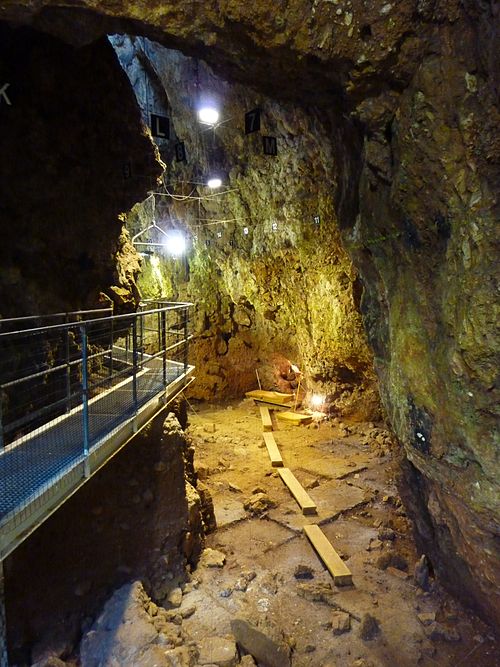
Deep within the Bükki National Park, Három-kúti Cave is a protected site where archaeology and natural beauty intertwine. Known for its historical finds, this cave is a must-see for those interested in Hungary’s underground secrets and prehistoric past.

Den Nationale Scene

Den Nationale Scene

Bergen

The Den Nationale Scene stands as Bergen’s historic theatre, a splendid Art Nouveau masterpiece situated prominently on Ole Bull’s square. Since its establishment in 1876, it has played a vital role in shaping Norway’s theatrical culture. The current building, dating from 1909, has hosted legendary performances and nurtured talents like Henrik Ibsen and Edvard Grieg. With its elegant façade and rich artistic history, the theatre continues to enchant audiences, fostering a vibrant scene for Norwegian drama and music. A visit here is an invitation to experience the country’s cultural soul in a timeless setting.

Panathenaic Stadium

Panathenaic Stadium

Athens

Standing as a symbol of Athens’ ancient athletic spirit, the Panathenaic Stadium is a marvel entirely crafted from gleaming white marble. This historic venue dates back to around 330 BC, originally built over a simple racecourse for the Panathenaic Games, and was later reconstructed in marble by the Roman-era benefactor Herodes Atticus around 144 AD. With a capacity of 50,000, it witnessed the first modern Olympic Games in 1896 and has since hosted numerous athletic events, including the Athens Classic Marathon and the Olympic flame handover. Its rich history and striking appearance make it a must-visit site that connects past, present, and the Olympic spirit.

Archbishop's Palace, Košice

Archbishop's Palace, Košice

Košice

On Hlavná Street, the Archbishop’s Palace radiates Rococo charm, its ornate façade hinting at imperial splendor. Once home to the Austro-Hungarian Emperor Franz Joseph I, this elegant building narrates stories of aristocratic life and ecclesiastical authority that once shaped Košice’s skyline.

Akademia Lubrańskiego – Archdiocesan Museum in Poznań

Akademia Lubrańskiego – Archdiocesan Museum in Poznań

Poznań

Step inside the Akademia Lubrańskiego – Archdiocesan Museum in Poznań – and discover a treasure trove of sacred art. As one of the oldest of its kind in Poland, this museum offers a fascinating glimpse into religious history and art, nestled within the historic streets of the Trakt Królewsko-Cesarski route. It’s a perfect stop for anyone interested in Poland’s spiritual heritage and artistic traditions.

Opera Krakowska

Opera Krakowska

Kraków

Opera Krakowska, founded in 1954, is a cornerstone of Kraków’s vibrant performing arts scene. Housed in a modern building since 2008, the opera stage presents an ambitious repertoire of operas, ballets, and musicals, attracting nearly 90,000 visitors annually. Its history traces back to Kraków’s early opera tradition, dating to the 17th century, and it has cultivated a roster of renowned conductors, directors, and performers. The opera offers an enriching cultural experience, blending Poland’s artistic heritage with international classics.

St. Katharinen

St. Katharinen

Osnabrück

In the heart of Osnabrück's old town rises the striking St. Katharinen Church, a prime example of late Gothic architecture. Its soaring tower, reaching 103 meters, has been a defining feature of the cityscape for centuries, guiding visitors and locals alike through the historic streets. Inside, the church's hall structure offers a glimpse into the spiritual and artistic life of the late Middle Ages, making it a must-see for those interested in religious history and architecture.

Planty Park

Planty Park

Kraków

Stroll through the historic heart of Kraków in Planty Park, a lush green belt that encircles the old city. Established between 1822 and 1830 on the site of medieval city walls, this 21-hectare park is a mosaic of gardens, monuments, and fountains. Statues of notable figures like Copernicus, Queen Jadwiga, and Jan Matejko punctuate the landscape, making it a favorite spot for locals and visitors alike to relax and soak in the city’s rich history.

Three steps to your trip

EuroTrails builds your days so you spend time in the city, not in tabs.

1

Browse the city

2

Shape your trip

3

Follow the map and story

Scroll to see all steps

Why EuroTrails

A great city break shouldn’t feel like a second job. Here’s what you get.

  • Places worth your time

    Classics, local favourites, and mood — organised so you can choose quickly.

  • Hidden gems included

    Go beyond the obvious without hunting through forums and blog posts.

  • Trusted travel voices

    Curated with insights from renowned travel bloggers, not random lists.

  • Your favourites, your itinerary

    Save what you love — EuroTrails builds a plan that feels personal.

  • Built for busy travellers

    Make the most of a few days away without evenings lost to planning.

  • Clear days, clear stories

    Open data, smart routing, and an AI-written narrative for each day.

Get launch updates

Be first to know when EuroTrails lands on Google Play.

FAQ

  • What is EuroTrails?

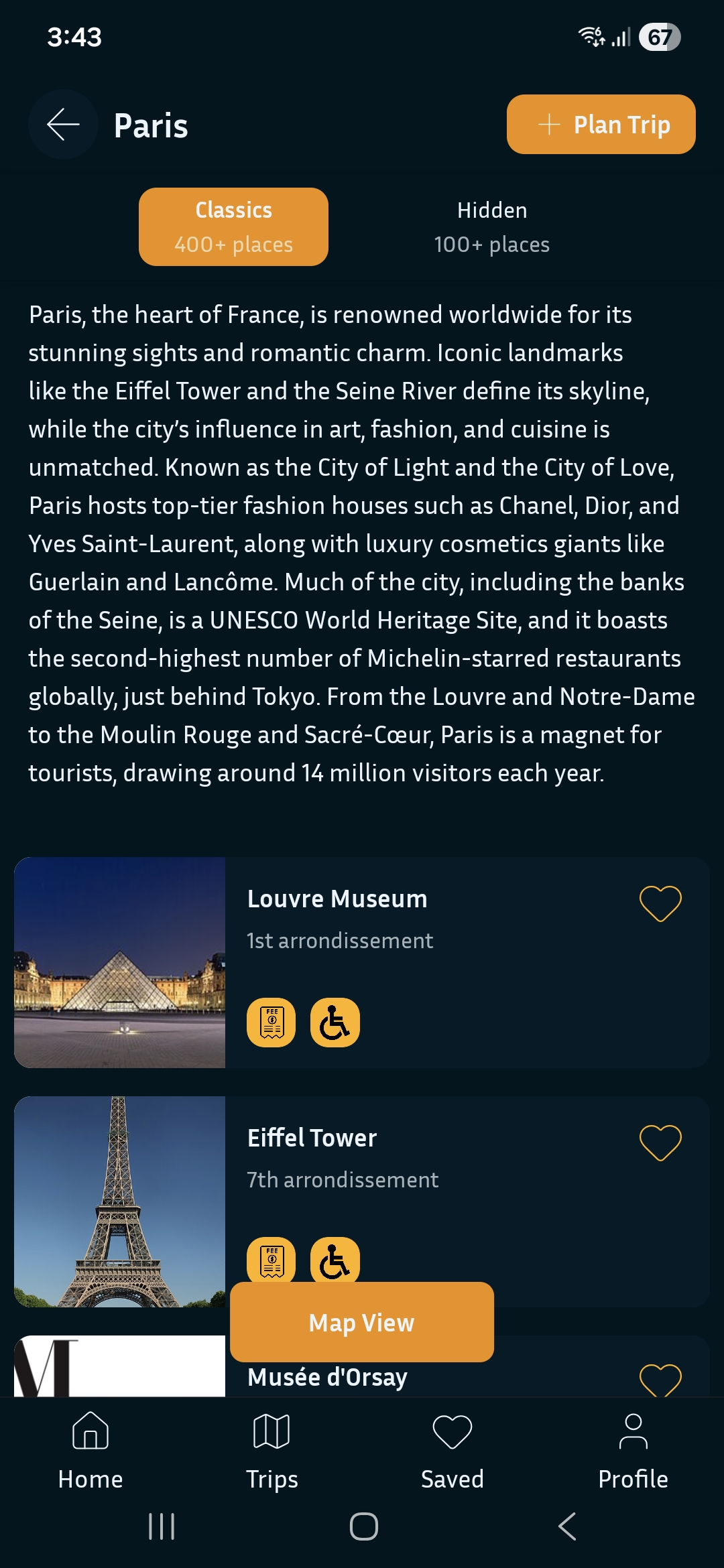
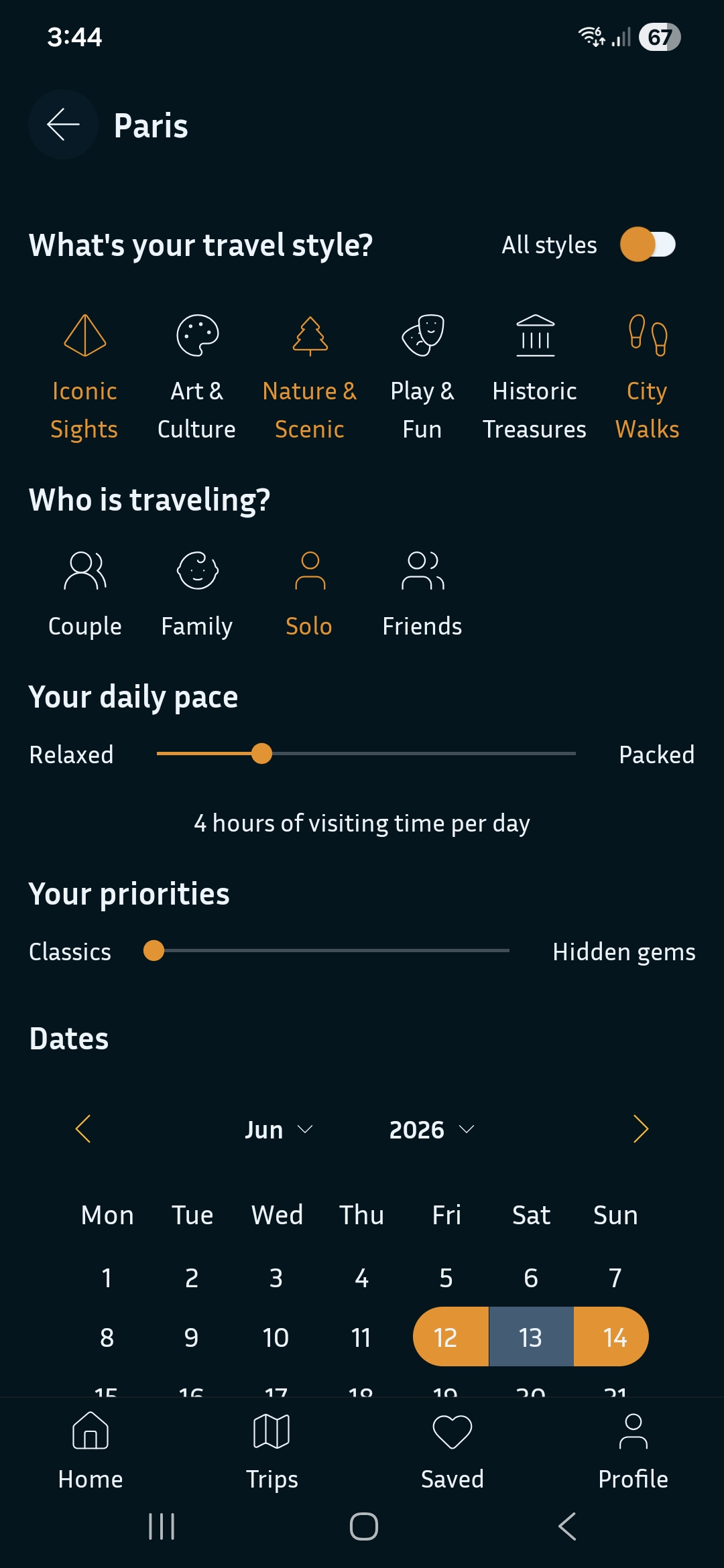
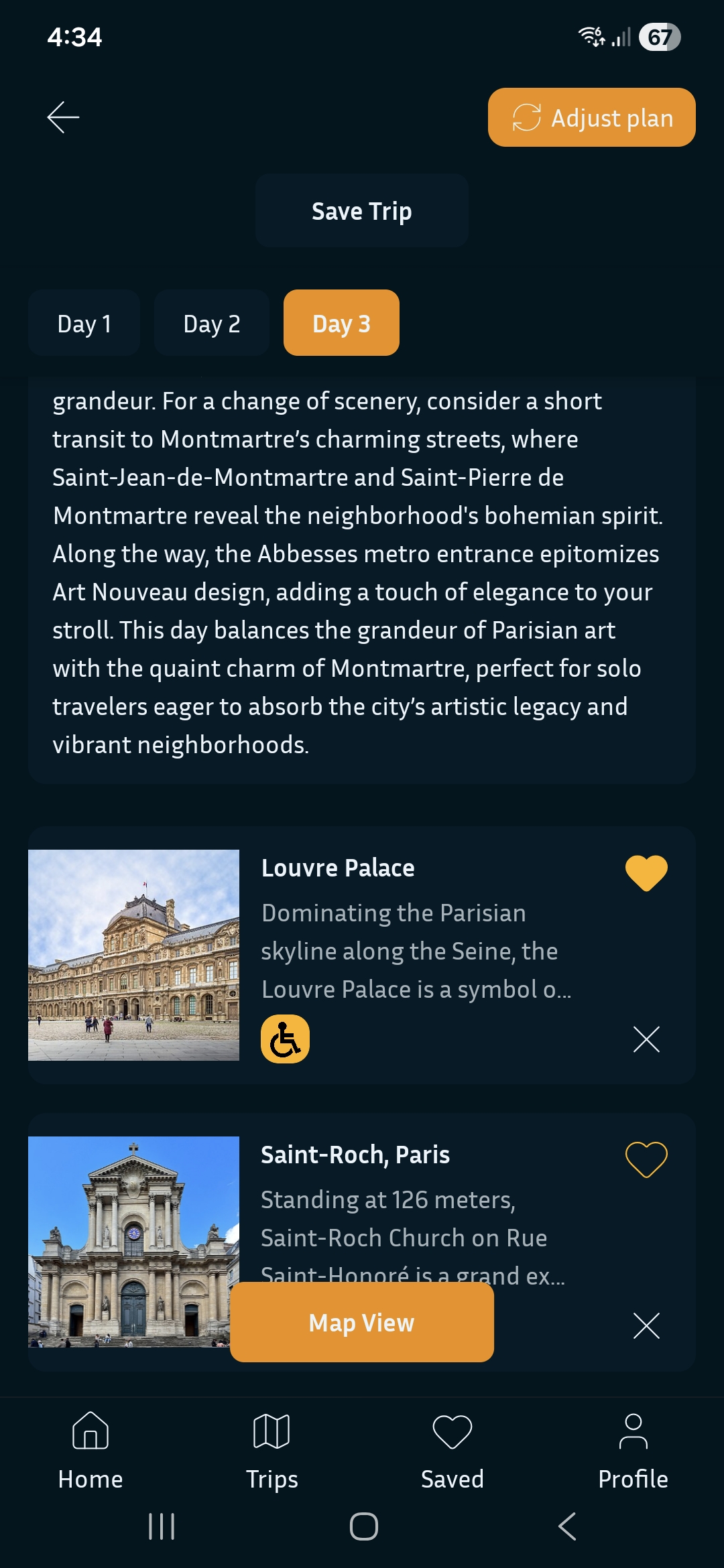
    A mobile app for European city breaks — curated places, your shortlist, and a day-by-day plan with routes on the map and a story for each day. For couples and families who want more than a pin list or a blog to stitch together.

  • When is it available, and where?

    Not yet. Android (Google Play) first; iOS may follow. Europe-first — see which cities are live in the app. Join the waitlist for launch news.

  • Is it free? Do I need an account?

    Free to start, with optional paid features later (we’ll announce pricing first). You’ll need an account to save places, plan, and keep trips.

  • Does it use AI?

    Yes — for day narratives and some place text, using your trip preferences. Details in our Privacy Policy.

  • Mobile only? How good are the routes?

    Planning is app-only; this site is for the waitlist. Routes favour sensible walking order — check hours on the ground and adjust in the app.